
 English
 русский
 Español


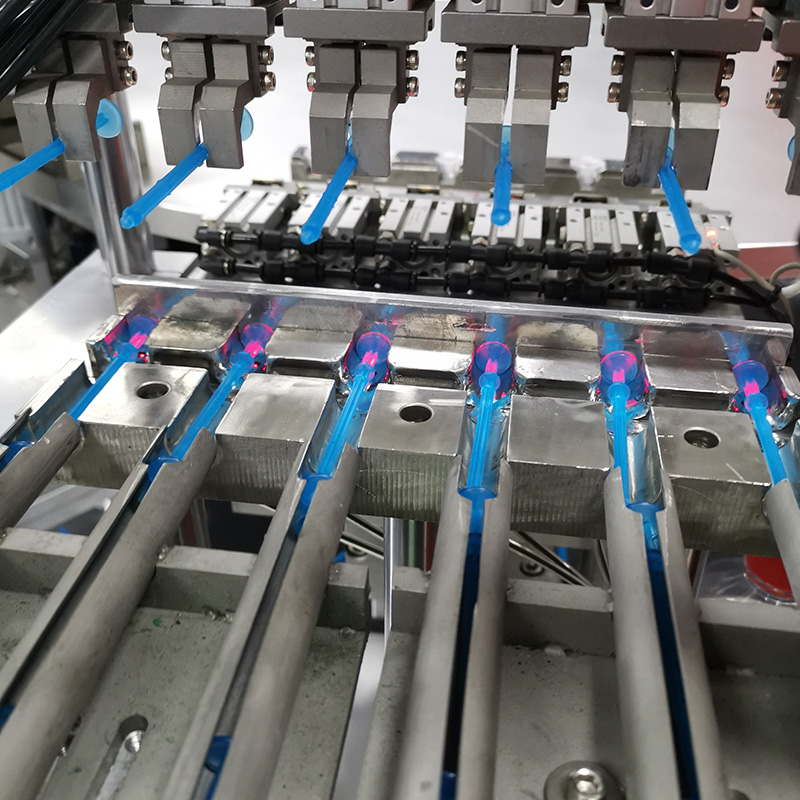
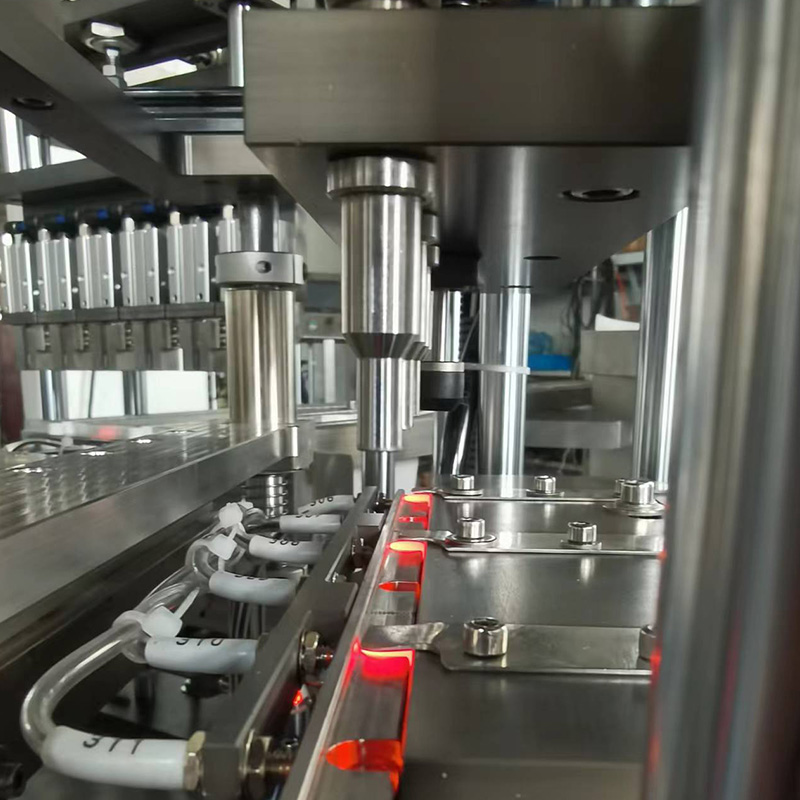
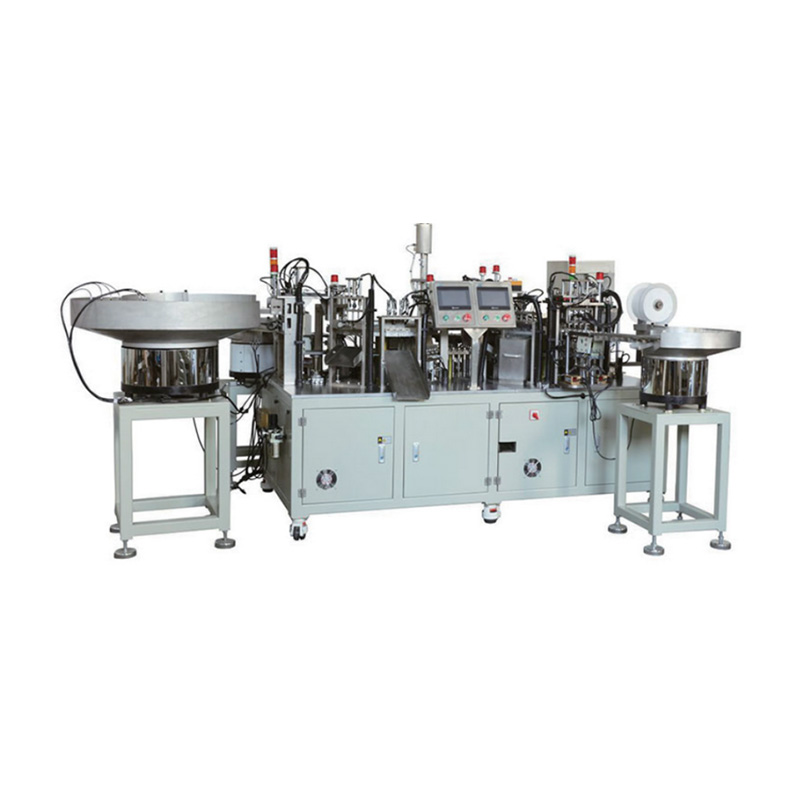
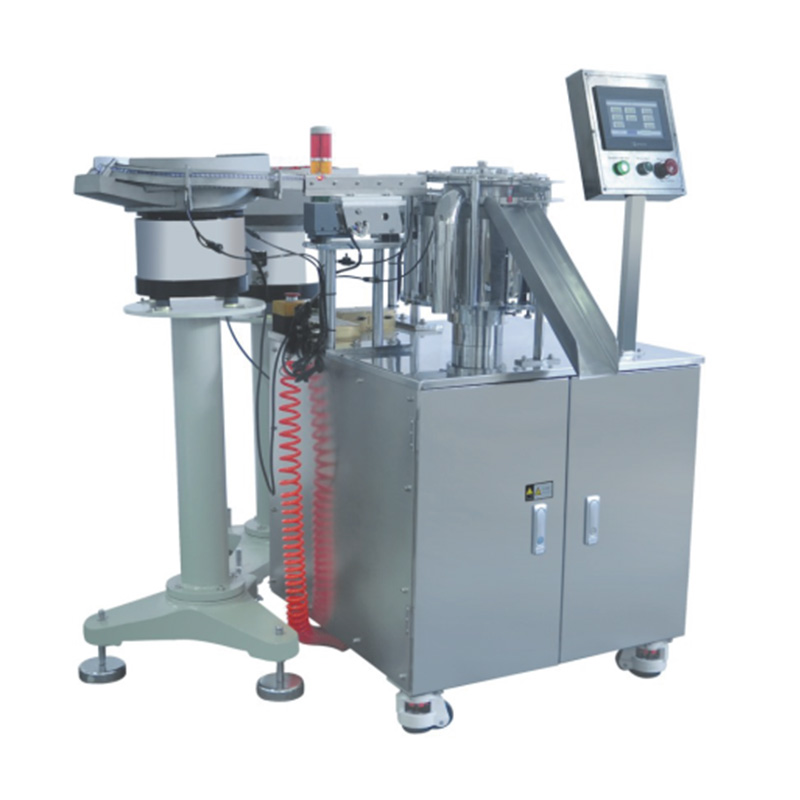
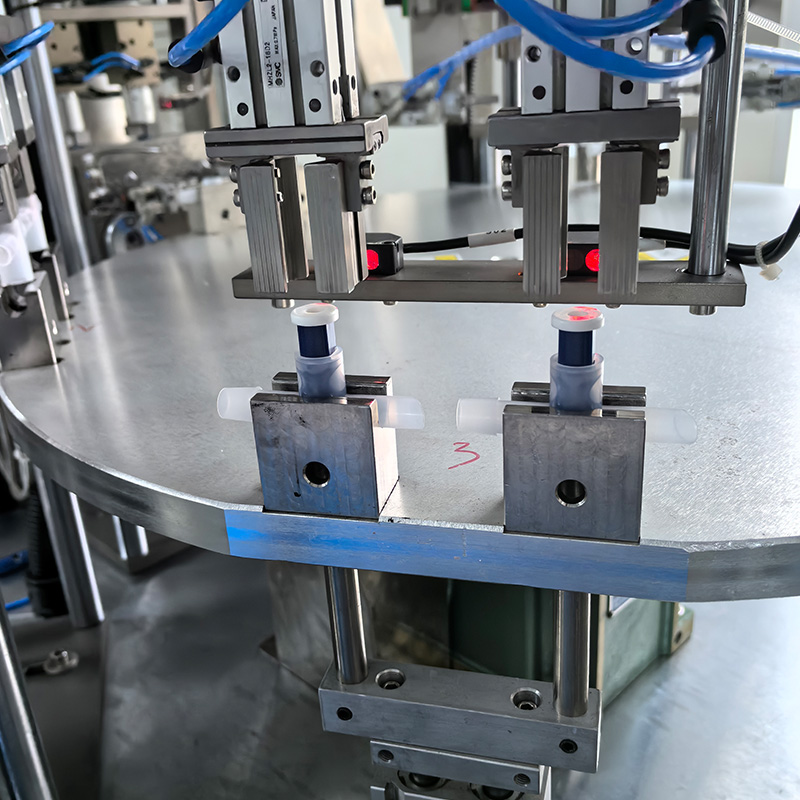
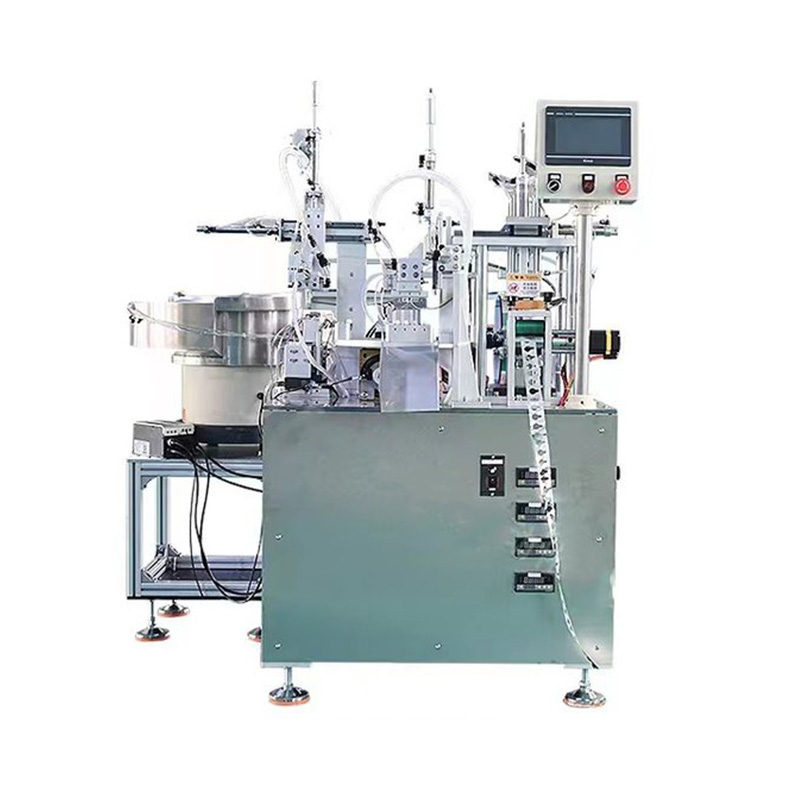
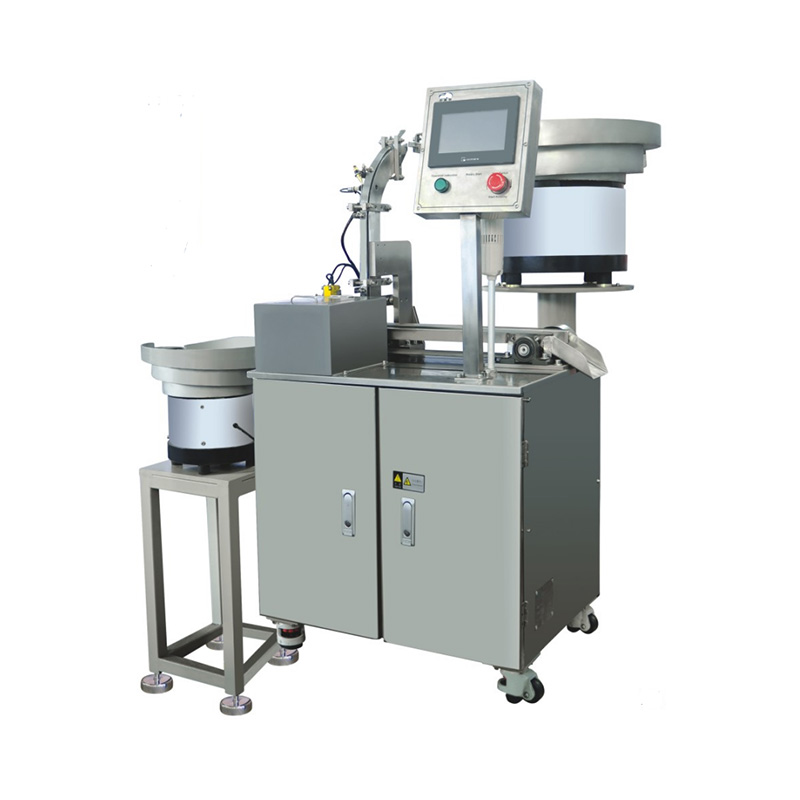
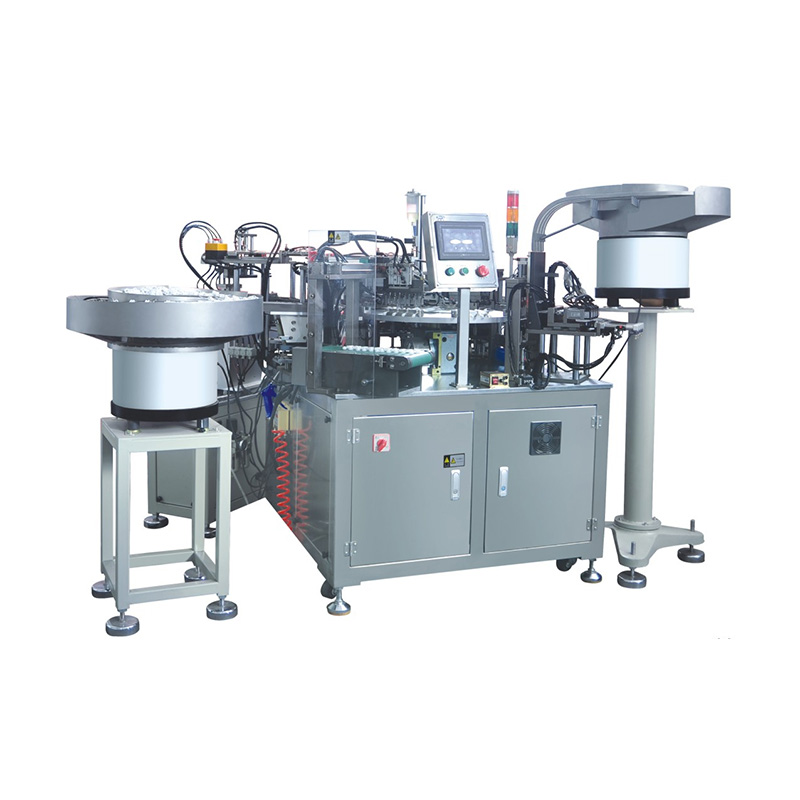
China Zhejiang Taizhou Ambe Trading Co., Ltd. is a manufacturer specializing in the production of medical equipment automation equipment.
Needleless IV connectors are small parts, but making them at scale is not a simple job. A connector may go through molding, feeding, orientation, assembly, inspection, and packaging before it leaves the production line. When volumes get higher, doing much of this work by hand becomes harder to manage. Output may vary, repetitive tasks take up operator time, and even small assembly mistakes can create quality problems.
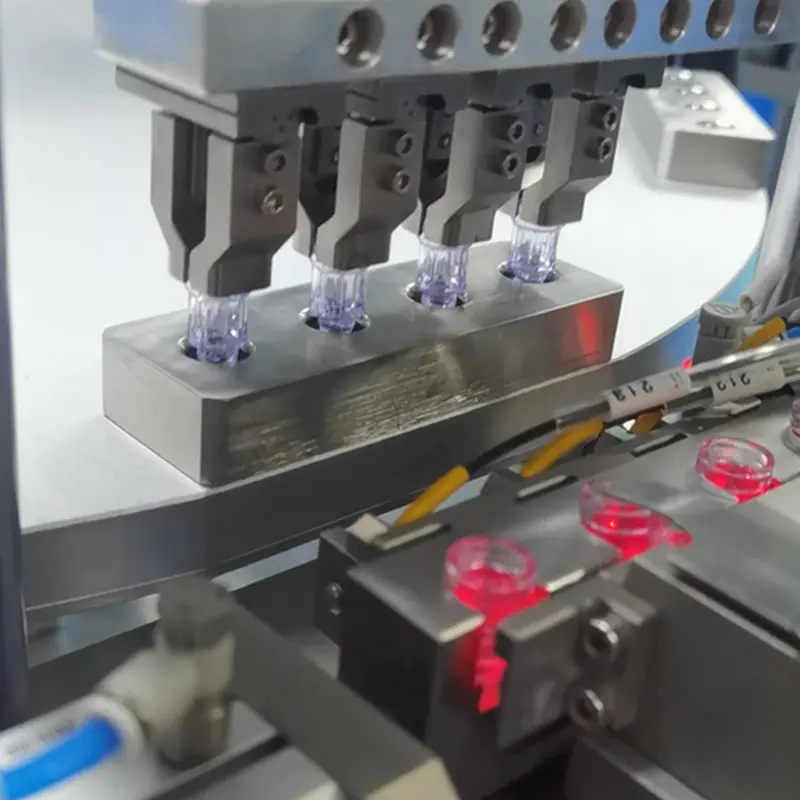
This is where a Fully Automated Production Line for Needle-Free IV Connectors can make a real difference. Instead of treating each production step as a separate operation, an automated line connects the processes into one coordinated system. Parts are moved automatically, assembly conditions are controlled, inspections happen at defined points, and production information can be collected along the way.
For medical device manufacturers, OEMs, equipment buyers, and factories running high-volume connector programs, the idea is not simply to add robots. The bigger goal is to create a production process that is stable, traceable, and practical to operate day after day.
Why Needleless IV Connector Manufacturing Can Be Challenging
A needleless IV connector usually contains several small components that have to work together properly. Depending on the design, the assembly may include a housing, sealing component, protective parts, and other internal pieces.
Each part has to arrive at the right station in the right position. At the same time, the process may need to control:
- Component dimensions
- Assembly orientation
- Part positioning
- Sealing
- Cleanliness
- Functional performance
- Visual appearance
- Traceability
Small components are especially awkward to handle manually. An operator may repeat the same action hundreds or thousands of times during a shift. It is not just tiring. Differences in handling, positioning, or timing can build up as production continues.
Once production volume increases, a more controlled way of handling those repetitive steps starts to make sense.
What a Fully Automated Production Line Can Include
An automated line is usually designed around the specific connector, so there is no single layout that fits every project.
A typical line may include:
- Component feeding
- Part orientation
- Automated transfer
- Component assembly
- Press-fitting or insertion
- Functional testing
- Vision inspection
- Reject separation
- Counting
- Packaging or tray loading
Some projects may need additional stations, while others may combine several operations into one section of the machine.
For factories producing different connector models, a modular design can also be useful. Some stations can be changed or adjusted when the product configuration changes, which gives the line a little more room to grow with the business.
Automated Feeding Reduces Manual Handling
Small plastic and rubber components are not always easy to sort or position by hand. Operators have to keep feeding parts, checking orientation, and moving components into the next operation.
Automatic feeding systems handle much of that repetitive work. Depending on the shape and material, the equipment may use bowls, tracks, conveyors, trays, or other feeding methods to present parts in a controlled way.
The important point is consistency. The assembly station receives parts in a predictable condition, so it does not have to pause as often for manual adjustment.
| Production stage | Manual approach | Automated approach |
|---|---|---|
| Part feeding | Operator loads and sorts parts | Automatic feeding and replenishment |
| Orientation | Manual positioning | Automated orientation |
| Transfer | Hand placement | Mechanical or robotic transfer |
| Assembly | Repetitive operator work | Controlled automatic assembly |
| Inspection | Manual checking | Vision or sensor-based inspection |
| Rejection | Operator removes defects | Automatic reject mechanism |
| Counting | Manual counting | Automated counting |
Operators are still needed. Their work simply shifts toward monitoring the equipment, supplying materials, dealing with exceptions, and keeping the process running properly.
Automated Assembly Can Improve Process Consistency
When several small parts must be assembled in a certain order, repeatability becomes a big issue.
Automated equipment can control insertion depth, pressing force, position, timing, and other process conditions according to the machine settings. Sensors can also confirm whether a component has reached the expected position before the next operation starts.
For example, when a part is not seated correctly, the system can stop the sequence or send that piece to a reject station.
That kind of control is useful because the machine is carrying out the same defined movement over and over. It does not eliminate every possible production issue, but it reduces some of the variation that comes with repetitive manual assembly.
How Automation Can Improve Production Efficiency
Automation efficiency does not come from speed alone. Several smaller improvements usually add up.
A connected line reduces the time spent moving parts between separate workstations. Automatic feeding keeps materials moving. In-line inspection catches certain problems earlier, and automatic counting removes another manual task.
Production performance can be looked at through measures such as:
- Cycle time
- Output per hour
- Equipment utilization
- Changeover time
- Reject rate
- Manual handling time
- Downtime
| Efficiency factor | Potential automation benefit |
|---|---|
| Cycle time | More stable and repeatable |
| Material transfer | Reduced intermediate handling |
| Repetitive assembly | Higher production consistency |
| Inspection | Faster in-line checks |
| Product counting | Automatic |
| Defect separation | Faster response |
| Production data | Easier monitoring |
The actual result depends on the machine design, connector structure, staffing arrangement, and production conditions. Automation does not automatically make every factory more efficient.
Vision Inspection Adds Another Layer of Quality Control
For small medical components, visual inspection can be difficult to keep consistent when it is done entirely by hand.
A camera-based vision system can check specific features according to defined inspection criteria. Depending on the project, it may look for:
- Component presence
- Assembly position
- Orientation
- Surface defects
- Missing components
- Color differences
- Dimensional features
- Visible contamination
When the system finds a defined defect, it can trigger an automatic reject action.
There is a practical limitation here, too. A camera cannot identify every type of defect. The inspection method has to match the actual problem the manufacturer needs to detect. Surface appearance, dimensions, and internal functional performance may require different methods.
So, before selecting a vision system, it helps to define exactly what needs to be inspected.
Functional Testing Can Be Integrated Into the Line
Appearance is only one part of connector quality.
Depending on the product design and manufacturing requirements, the line may also include functional checks. These could involve confirming component movement, assembly position, the presence of certain elements, or other characteristics specific to the connector.
The testing method should be developed around the approved product and process requirements. It is not enough to install a generic test station and assume it covers everything.
Having functional checks on the line does give manufacturers a useful advantage: potential problems can be identified before parts reach later production stages.
Automation Can Help Reduce Assembly Errors
Manual assembly is naturally affected by repetitive work, operator fatigue, and differences in working habits.
A properly designed automated system can standardize actions such as inserting, pressing, transferring, and positioning. Sensors can also be used to verify that the correct conditions are present before an operation continues.
For instance, the machine may confirm that a component is present before starting the insertion cycle. Another sensor may check whether the assembly has reached a specified position.
These checks can prevent some errors from moving further down the line.
Still, there is a catch: an automated machine can repeat a wrong setting just as consistently as a correct one. Machine setup, process validation, maintenance, and regular monitoring still matter.
Clean Production and Controlled Handling Matter
Medical components may have specific cleanliness requirements based on their intended use and manufacturing process.
Once components enter a controlled automated process, reducing unnecessary manual contact can be helpful. Automatic transfer, enclosed stations, and controlled material handling may reduce some opportunities for contamination.
But automation is only one part of cleanliness control. The production environment, cleaning procedures, operator practices, packaging, and material storage all need to fit the actual requirements of the product.
For that reason, clean production should be considered when designing the whole line, not added as an afterthought.
Production Data Makes the Line Easier to Manage
One useful feature of automated equipment is that it can collect production information as the line runs.
Depending on the system, the manufacturer may monitor:
- Production quantity
- Cycle time
- Reject quantity
- Machine alarms
- Station status
- Downtime
- Equipment utilization
This information can make troubleshooting much more practical.
Suppose one assembly station is generating noticeably more rejected parts than the others. Instead of checking the entire line blindly, engineers can focus on that station and investigate its tooling, sensors, or process conditions.
Over time, production data can also support maintenance planning and help managers understand where capacity is being lost.
Automated Reject Systems Prevent Defective Parts From Continuing
Inspection is only useful when the production line can do something with the result.
When a part fails a defined inspection, an automatic reject mechanism can move it into a separate container or reject path. This reduces the risk of defective and accepted products becoming mixed together.
It is also useful to record why the part was rejected.
| Reject information | Possible use |
|---|---|
| Missing component | Identify feeding problems |
| Incorrect orientation | Check feeder or transfer station |
| Assembly position error | Adjust assembly mechanism |
| Visual defect | Review molding or handling process |
| Functional test failure | Investigate component or assembly conditions |
This kind of information gives the production team something more useful than a simple reject count. It shows where recurring issues may be coming from.
Automation Becomes More Valuable as Production Volume Increases
Automation makes more economic sense in some production situations than others.
A factory producing a small quantity of connectors may be comfortable with manual or semi-automatic assembly. As volume grows, however, the labor required for repetitive work can become a larger part of the production cost.
High-volume production also creates more opportunities to benefit from stable cycle times and automatic inspection.
| Production situation | Potentially suitable approach |
|---|---|
| Low volume | Manual or basic semi-automatic process |
| Growing volume | Semi-automatic or modular automation |
| High-volume standardized production | High-level automation |
| Multiple connector models | Flexible or changeover-focused automation |
| Continuous large-scale production | Integrated automated line |
The decision should still consider product complexity, labor availability, quality requirements, expected production volume, and the service life of the equipment.
Flexible Automation Helps With Multiple Product Models
Many medical device factories produce more than one connector model. A new version may have a different housing, internal part, or assembly sequence.
A completely fixed line can be difficult to adapt in that situation.
For multi-model production, buyers may look at:
- Quick-change tooling
- Recipe management
- Adjustable feeders
- Modular stations
- Automatic parameter selection
- Product identification
- Tooling interchangeability
Changeover time matters here. Even a highly automated line can lose a lot of productive time if switching between models is slow or complicated.
Equipment Reliability Is as Important as Machine Speed
A machine that runs fast on paper does not necessarily deliver high production output in the factory.
Frequent stoppages, difficult maintenance, sensor failures, and complicated troubleshooting can quickly reduce the practical benefit of automation.
Buyers should pay attention to:
- Machine cycle stability
- Pneumatic components
- Sensors
- Motors and actuators
- Control cabinets
- Servo systems
- Spare parts
- Preventive maintenance access
The equipment supplier should also explain routine maintenance and technical support clearly.
When evaluating a Fully Automated Production Line for Needle-Free IV Connectors, long-term operation deserves as much attention as the advertised cycle speed.
What Should Manufacturers Ask an Automation Equipment Supplier?
A detailed discussion with the equipment supplier can clear up many practical questions before the project starts.
Important questions include:
- What connector designs can the line handle?
- What is the expected cycle time?
- Which assembly processes are automated?
- What inspection functions are included?
- Can defective parts be automatically rejected?
- How are component shortages detected?
- What changeover options are available?
- What production data can be recorded?
- What maintenance is required?
- Are spare parts available?
- Can the equipment be customized?
- How are machine acceptance tests performed?
For a new project, it is also useful to provide product drawings, samples, expected production volume, and quality requirements early in the discussion. These details give the equipment supplier something concrete to work with.
Customization Is Often Necessary for Medical Assembly Lines
Needleless IV connectors can look similar from a distance while having quite different internal structures.
A change in component size, shape, or assembly sequence may affect the feeder, tooling, transfer mechanism, or inspection station. This is why customized automation is often part of the engineering process.
Possible customization areas include:
- Feeding mechanisms
- Assembly tooling
- Transfer systems
- Sensor positions
- Vision inspection
- Reject stations
- Control logic
- Packaging interfaces
It is usually easier to address these requirements during the design stage. Making major modifications after the machine has already been completed is a different story and may require extra engineering work.
Validation and Acceptance Testing Need Clear Criteria
Medical production equipment should be checked against clearly defined requirements before it is accepted for production use.
The acceptance criteria may cover:
- Cycle time
- Production output
- Assembly accuracy
- Inspection performance
- Reject function
- Alarm response
- Changeover
- Continuous operation
The exact standards depend on the project and should be agreed between the equipment supplier and customer.
Clear criteria make machine testing much easier. Both sides know what the equipment is expected to do, and problems are easier to identify during commissioning.
Building a More Efficient Needleless IV Connector Production Process
A Fully Automated Production Line for Needle-Free IV Connectors brings feeding, assembly, inspection, handling, and other operations into one connected manufacturing process.
That can reduce repetitive manual work, improve cycle consistency, speed up in-line inspection, separate defective parts automatically, and provide better production data. These advantages become more noticeable as production volume increases.
Still, automation is not simply about buying a faster machine. The line needs to match the connector design, component tolerances, assembly sequence, inspection needs, cleanliness controls, production volume, and possible future changes.
For medical device manufacturers, defining these requirements early makes the equipment project much easier to manage. A capable automation supplier should be able to discuss product-specific engineering, testing, customization, maintenance, and long-term production needs.
When all of those pieces are designed to work together, automated production can provide a more stable and scalable way to manufacture needleless IV connectors while keeping the focus on consistent assembly and controlled production.