
 English
 русский
 Español



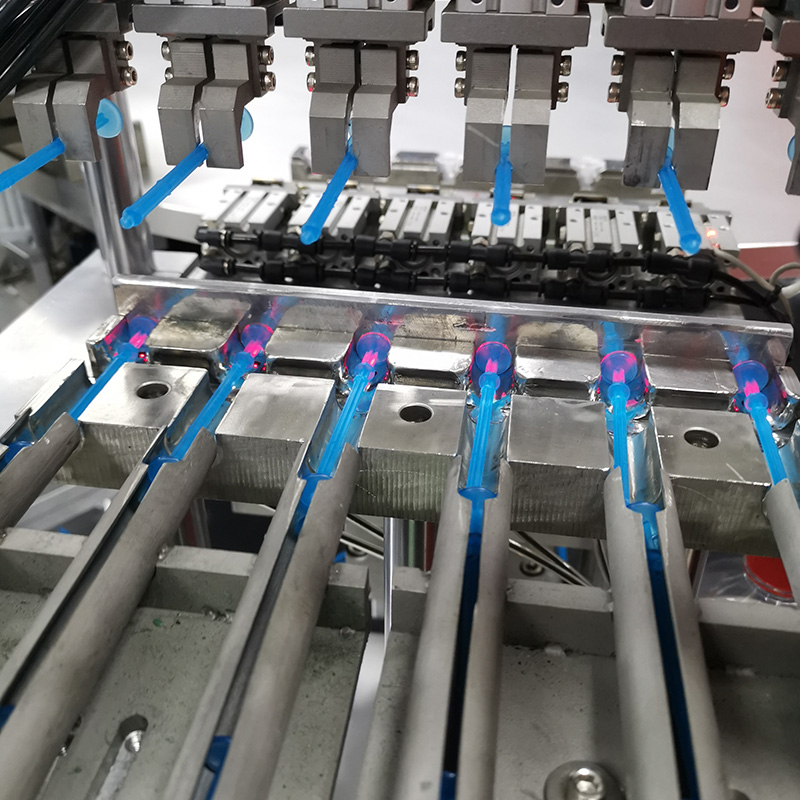
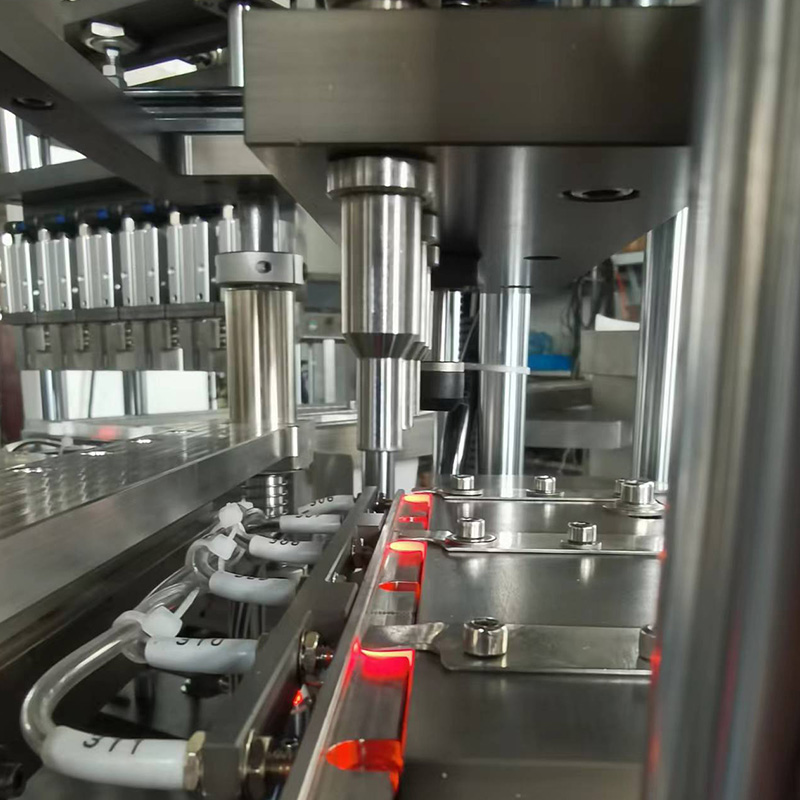
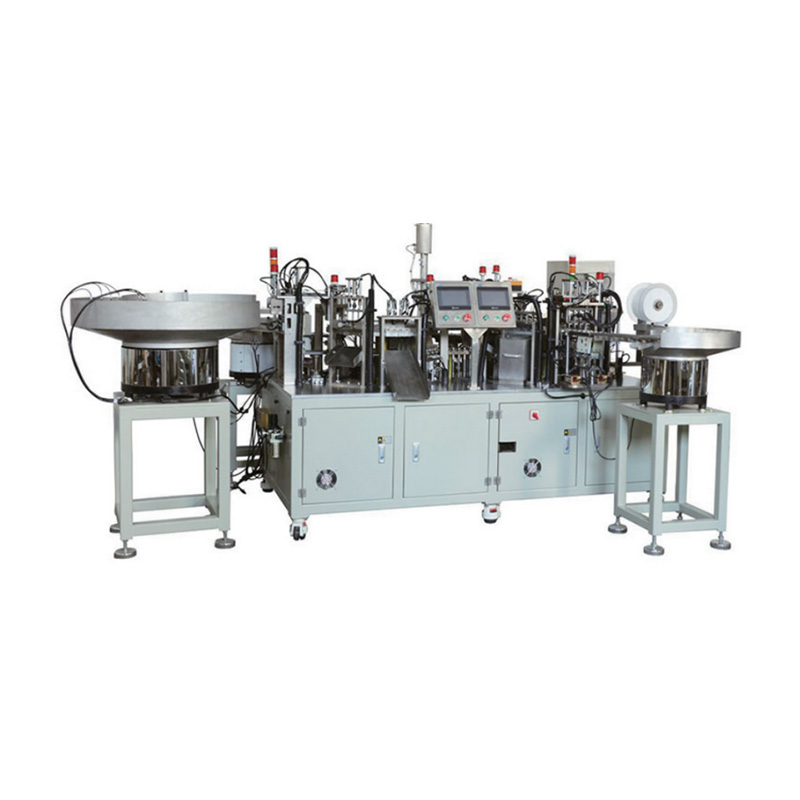
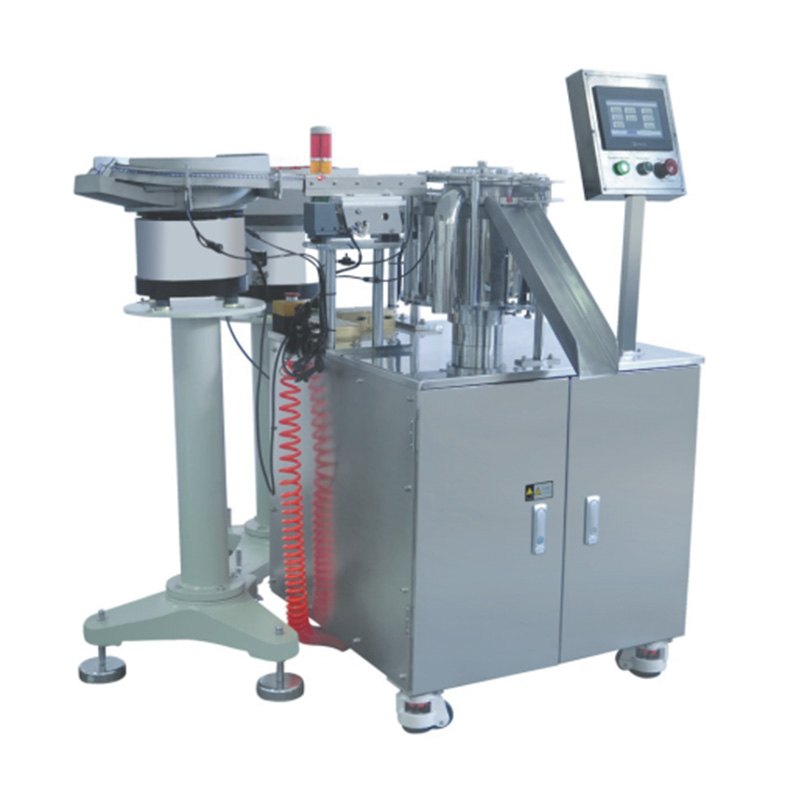
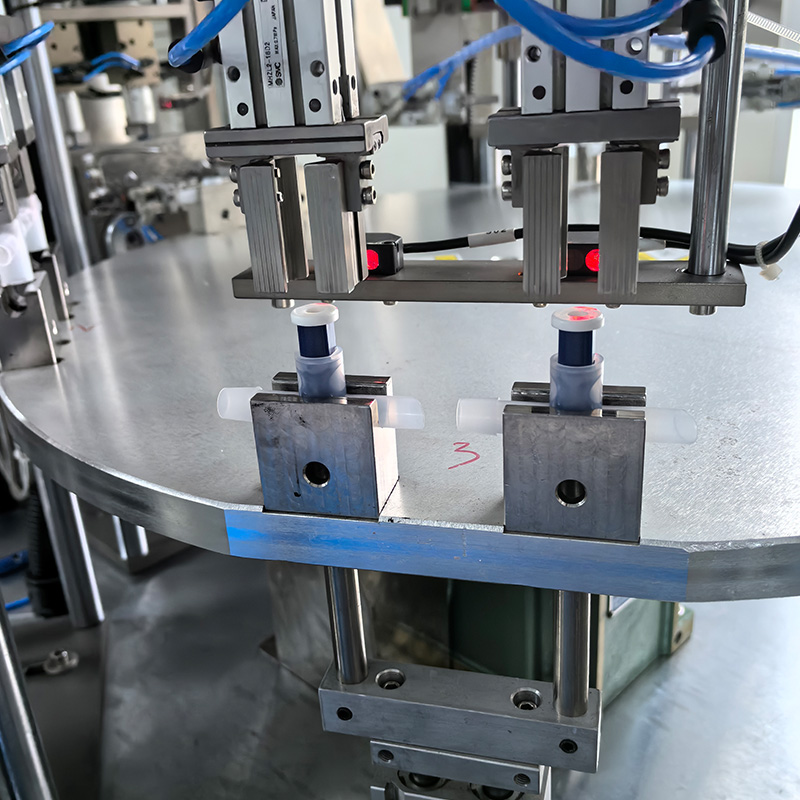
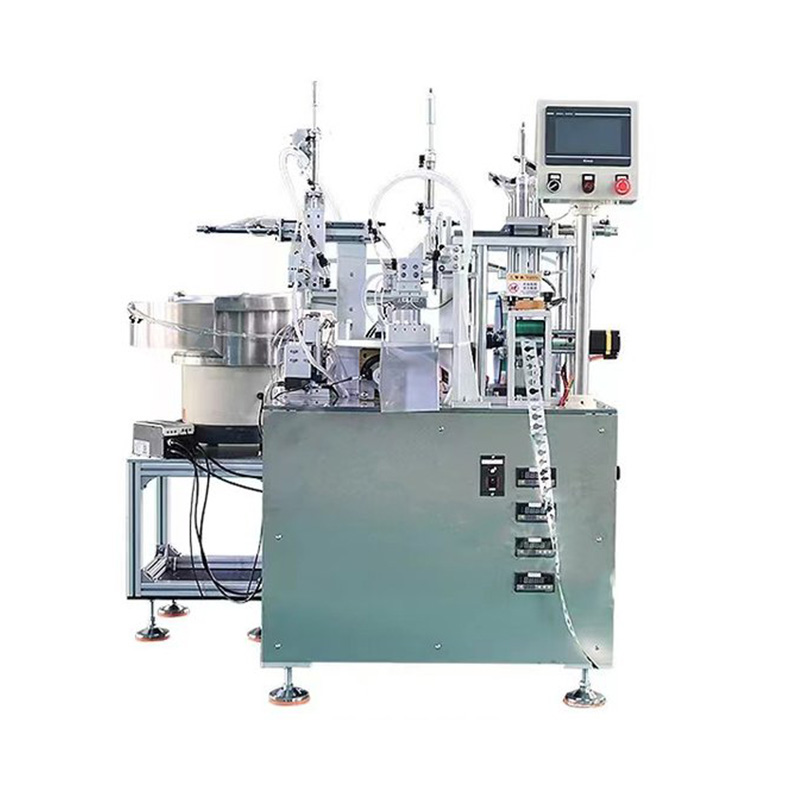
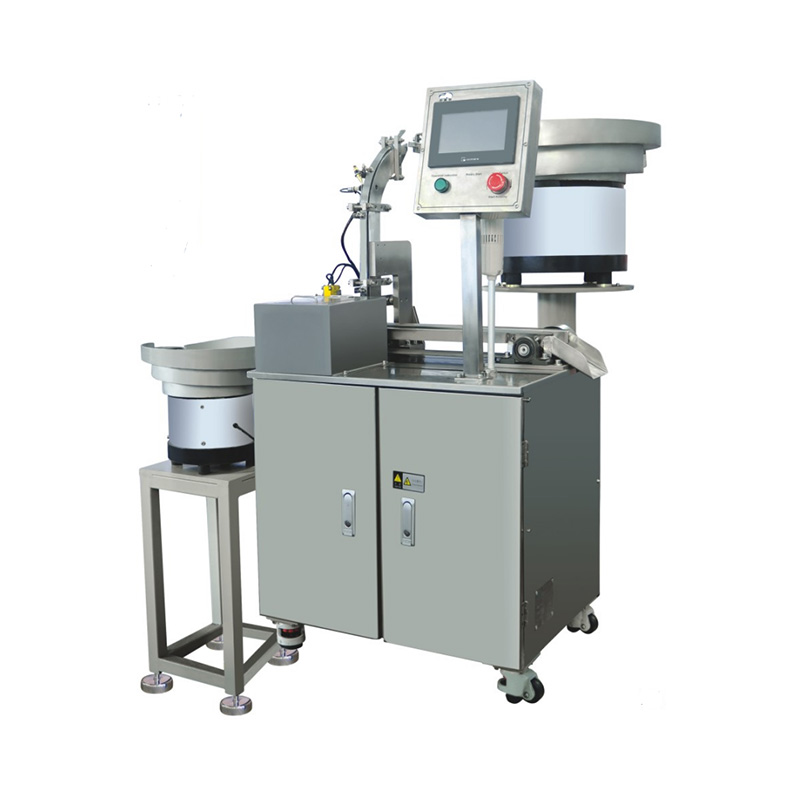
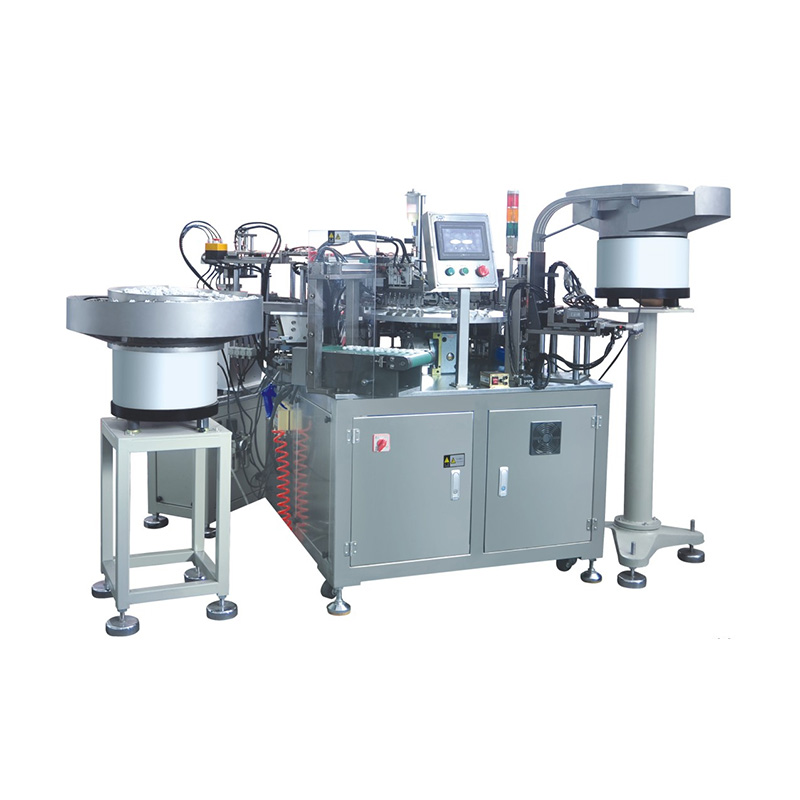
China Zhejiang Taizhou Ambe Trading Co., Ltd. is a manufacturer specializing in the production of medical equipment automation equipment.
Medical connectors sit inside devices used for fluid transfer, electrical connections, monitoring, and plenty of other healthcare applications. They're not simple parts. A single connector might contain a molded housing, metal contact pins, elastomeric seals, a locking mechanism, and protective components—each one needing accurate placement. Get a seal slightly off or a pin inserted at the wrong depth and the connector may leak, fail electrically, or refuse to mate properly.
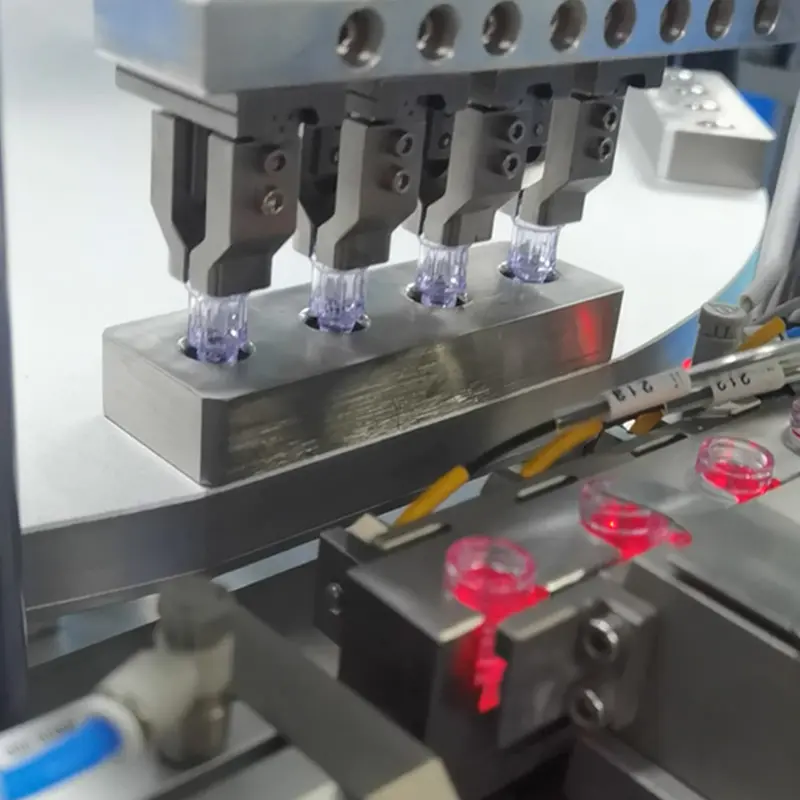
A modern Medical Component Assembly Machine can handle this kind of multi-part work, but only when feeding, positioning, joining, inspection, and control systems are designed around the product's actual requirements. That's the part buyers need to evaluate carefully.
Why Multi-Part Medical Connector Assembly Requires High Precision
Medical connectors may look simple from the outside. Inside, several components with different dimensions, materials, and assembly needs have to come together. Small dimensional variations affect alignment, insertion force, sealing performance, electrical contact. Wrong orientation prevents parts from fitting. Excessive force deforms delicate plastic features or damages seals.
Production complexity climbs when connectors have multiple variants. Different models may share similar components but require different assembly sequences, insertion depths, or inspection criteria. A suitable automated system has to manage mechanical precision and process consistency through the entire cycle—not just at one station.
How a Medical Component Assembly Machine Manages Multiple Parts
A machine built for multi-part assembly typically combines several coordinated stations. Each station performs a specific operation while the control system manages sequence and verifies process conditions.
Common functions include:
- Automatic component feeding: vibratory bowls, flexible feeders, trays, or dedicated feeding systems supply individual parts in the required orientation.
- Precision positioning: fixtures, robotic handling systems, mechanical guides align components before assembly.
- Controlled insertion: servo-driven actuators or pneumatic mechanisms install terminals, seals, other components with defined force and travel limits.
- Joining and fastening: press-fitting, snap-fitting, ultrasonic welding, or other validated processes secure components per product specifications.
- In-process inspection: sensors and cameras check component presence, orientation, positioning, selected dimensional characteristics.
The right configuration depends on connector geometry, production volume, material properties, quality requirements. Not every connector needs every station. Unnecessary process complexity increases maintenance demands and can make changeovers harder than they need to be.
Key Technologies That Support Complex Connector Assembly
Several technologies help manufacturers improve assembly accuracy and process control.
Vision Systems for Component Recognition
Machine vision identifies component orientation, detects missing parts, verifies positioning before assembly. This matters when connectors contain small pins, asymmetrical housings, or visually similar components. Lighting, camera resolution, inspection angles, image-processing settings must be selected according to the features being inspected. Vision inspection should be validated against known acceptable and defective samples—not just checked once during installation.
Servo-Controlled Assembly Mechanisms
Servo systems provide programmable control over movement, speed, position, force. Useful when different connector components require different insertion profiles. Force-displacement monitoring can identify abnormal assembly conditions: incomplete insertion, incorrect component placement, unexpected resistance. These measurements need product-specific acceptance limits to separate genuine defects from normal process variation.
Flexible Feeding and Robotic Handling
Flexible feeders and robotic systems support products with different shapes and orientations. They reduce the need for dedicated mechanical tooling when manufacturers frequently change connector models. The trade-off: flexible systems require careful programming, validation, maintenance. For stable, high-volume production, dedicated feeders may be simpler and more economical.
What Quality Controls Are Needed for Multi-Part Connectors?
Successful assembly requires more than confirming all components are present. Each critical feature has to meet its defined acceptance criteria.
| Quality control | What it verifies | Typical inspection method |
|---|---|---|
| Component presence | All required parts are installed | Vision sensors or presence sensors |
| Orientation | Components face the correct direction | Camera inspection or mechanical verification |
| Insertion depth | Parts reach the specified position | Displacement measurement |
| Assembly force | Insertion remains within approved limits | Force monitoring |
| Seal installation | Seals are correctly positioned and undamaged | Vision inspection and functional testing |
| Connector performance | Finished products meet functional requirements | Electrical, leak, or mechanical testing |
Not every characteristic can be verified directly on the assembly machine. Sealing integrity may require a dedicated leak test. Electrical connectors may need continuity or contact-resistance testing. Manufacturers should establish inspection methods based on product risk analysis and applicable regulatory and quality-system requirements. Inspection results should be traceable where required.
Can One Machine Handle Different Connector Designs?
A well-designed system can support multiple connector models, but flexibility depends on how much the products vary.
If different models share similar dimensions and assembly sequences, changeovers may need only fixture adjustments, feeder settings, recipe selection. More substantial design differences may require interchangeable tooling, additional feeding modules, or changes to machine layout.
Before selecting equipment, evaluate:
- Number of connector models and expected future variants.
- Differences in component dimensions and materials.
- Assembly sequence and joining methods.
- Required production capacity and cycle time.
- Changeover frequency and tooling requirements.
- Inspection, data recording, traceability needs.
A modular machine architecture makes future modifications easier. But flexibility should be evaluated through actual changeover trials, not assumed from the equipment specification. A machine that looks flexible on paper can turn out to be anything but on the floor.
How Manufacturers Can Evaluate Machine Performance
Machine acceptance should include testing with representative production components. Trials should cover normal operating conditions, expected material variation, foreseeable assembly errors.
Important performance indicators: cycle time, first-pass yield, defect detection capability, changeover duration, equipment availability. Manufacturers should also examine how the system responds to missing parts, misfeeds, incorrect orientation, abnormal insertion forces.
For medical manufacturing, process validation matters. Installation Qualification (IQ), Operational Qualification (OQ), Performance Qualification (PQ) may be appropriate depending on the process and the manufacturer's quality system. The validation strategy should demonstrate that the equipment consistently performs its intended functions under defined conditions.
Building a Reliable Production Process for Medical Connectors
A Medical Component Assembly Machine can handle complex multi-part medical connector assembly when mechanical design, automation technology, inspection strategy, process controls match the product. The effective equipment selection starts with a detailed review of connector drawings, critical dimensions, material characteristics, assembly tolerances, functional requirements. Manufacturers should then run feasibility tests with actual components and establish measurable acceptance criteria.
That engineering-led approach reduces assembly defects, improves production consistency, creates a more dependable manufacturing process as connector designs and production demands evolve.